Kawaikini Public Charter School: Creating an Accreditation Video on Kauaʻi | Kanakanowelo
More Than an Accreditation Video: Documenting Kawaikini Public Charter School Through Film
Creating an accreditation video for a Hawaiian charter school is about much more than arriving with a camera and filming a few classrooms.
It requires planning, flexibility, patience, and an understanding that some of the most important learning may not happen inside a classroom at all.
Over the course of approximately four months, I had the opportunity to document Kawaikini Public Charter School on Kauaʻi. The goal was to create a film that could serve multiple audiences—from accreditors and funders to community members and families considering Kawaikini for their keiki.
More importantly, the film needed to authentically show what Kawaikini does, why the school exists, and how its students learn.
Showing the Work, Not Just Talking About It
For schools and organizations, it is easy to write about a mission.
Showing that mission in action is different.
Kawaikini wanted the film to demonstrate how its curriculum and field experiences align with what the school has committed to providing its students, community, funders, and accreditors.
That meant I couldn't create this film entirely from interviews.
I needed to follow the students.
Filming began late in the school year, when many of Kawaikini's final field trips were already scheduled. The school provided me with upcoming dates and connected me with the teachers responsible for each activity. From there, I coordinated with the kumu and followed different grade levels into the places where their learning was actually happening.
There wasn't a detailed shot list telling me exactly what would happen next.
Outside of the interviews, almost everything in the film was candid.
My job was to observe, understand what was happening, and decide in the moment what would best communicate that story through film.
When Kauaʻi Becomes the Classroom
Over those four months, filming took me into environments throughout Kauaʻi that I probably would never have experienced on my own.
Students hiked into the mountains while learning GPS skills and identifying native species.
From high vantage points, students learned to recognize traditional land divisions across the landscape.
At the shoreline, students walked through shallow tide pools while observing habitats and the life within them. Other groups visited beaches and sand dunes, learning through direct observation and helping care for those environments.
Community members shared cultural practices with students.
One senior shared a project about the place where their family harvests Hawaiian salt and the preparation involved in that practice. Another examined the impacts of tourism on an area and reflected on how learning more about that place strengthened their own connection and responsibility to care for it.
Another grade level explored Queen Emma's relationship with northern Kauaʻi.
I also documented a school conference where each grade level had an opportunity to share what they had been learning throughout the year.
Taken individually, these were field trips, lessons and student projects.
Together, they helped tell a much larger story about Kawaikini's approach to education.
Four Months of Filming Requires Flexibility
A project like this is very different from filming a commercial in a controlled environment.
One day I could be filming near the ocean, exposing equipment to sand and salt. Another day could require carrying equipment while hiking into the mountains. Sometimes I needed stabilization while moving alongside students. At other times, the best approach was simply to stay back and allow an activity to happen naturally.
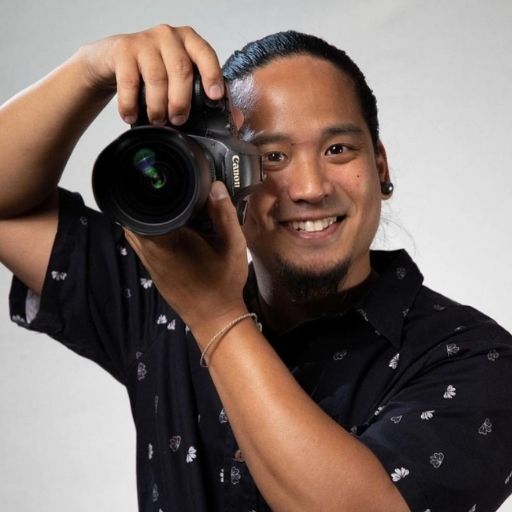
My production kit included a Canon 1DX Mark II, DJI Ronin RS 3 stabilizer, DJI Mic 2, Insta360 X5, backpack-mounted and pole-mounted 360° camera configurations, and a PolarPro variable ND filter.
But the equipment was only one part of making the project work.
The greater challenge was constantly adapting.
What is the lesson happening here?
Where can I position myself without interfering?
Which student's interaction helps communicate what they are learning?
What does the viewer need to see now for something said later in an interview to make sense?
And after months of accumulating footage from different locations, grade levels and activities, another challenge began: turning everything into one story that flowed naturally.
Telling the History Behind Kawaikini
I didn't want the finished film to only show what Kawaikini looks like today.
Understanding how the school came to be was an important part of understanding why its work matters.
Teachers provided recaps of what their students had learned throughout the year, and I interviewed one of the educators who helped form Kawaikini about the school's beginnings and its development into what it is today.
That history became an important part of the narrative.
For potential families, it provides context for the kind of education their keiki could experience. For stakeholders and community members, it helps explain the purpose behind the school. For funders and accreditors, the field footage provides visual evidence of students actively participating in the kind of learning described in Kawaikini's mission and curriculum.
Rather than simply telling an audience what happens at Kawaikini, film allowed us to show it.
Producing an Entire Film in ʻŌlelo Hawaiʻi
One of the defining aspects of this project is that the entire film is in ʻōlelo Hawaiʻi.
That added another layer to both production and post-production.
My own educational background includes attending Hawaiian immersion school at Waiau, Hālau Kū Māna Public Charter School, and graduating from Ānuenue. Because I came through Hawaiian-language educational environments myself, I could understand what teachers and students were discussing while I filmed.
That became especially valuable during editing.
Instead of treating the Hawaiian language as something separate from the visuals, I could listen to what was being said, understand the context, find footage that supported those statements, determine where an edit naturally belonged, and work through Hawaiian-language captions with a better understanding of the material.
For this particular project, understanding the language wasn't simply a convenience.
It helped me understand the story I was being trusted to tell.
Cultural Awareness Matters Behind the Camera
Understanding Hawaiian language and culture does not mean assuming that I automatically know what I am allowed to film.
In fact, I believe the opposite approach is important.
Ask rather than assume.
There may be times when someone unfamiliar with a cultural practice sees something interesting happening and instinctively moves directly in front of everyone to get the "best shot."
But the best camera angle isn't always the appropriate place for the camera.
When documenting oli, hula, cultural practices or other activities, I would rather ask where I can stand, what I can film, what I shouldn't film, and whether there are particular dos and don'ts I should understand.
Something being visible doesn't automatically mean it should be recorded.
And getting footage should never come at the expense of disrespecting, disrupting or potentially misrepresenting the people who trusted you to be there.
For kanakaNowelo, cultural awareness isn't about claiming to know everything. It's knowing when to ask.
Authenticity Over Staging
Except for the interviews, what you see throughout the film happened naturally.
Students weren't repeatedly asked to walk somewhere again because I missed the shot. Activities weren't reconstructed for the camera. The field trips weren't organized around the production.
I adapted the production around them.
That distinction mattered to me because the purpose of the film was to communicate what learning at Kawaikini actually looks like.
The candid moments—the interactions between kumu and haumāna, students examining their surroundings, walking across the ʻāina and sharing what they had learned—help give the finished film its authenticity.
And when the school finally watched it, that authenticity seemed to resonate.
I was told that people loved the finished film. Some shared that watching it made them emotional and even brought tears of happiness.
For me, that's one of the most meaningful responses a documentary project can receive.
What This Project Taught Me About Organizational Storytelling
An accreditation, stakeholder or grant video shouldn't simply be a collection of beautiful shots.
It should answer a question:
What does this organization actually do, and why does its work matter?
Sometimes answering that question requires filming for a day.
Sometimes it requires following a story for months.
The Kawaikini project required beaches, mountains, classrooms, interviews, field trips, community knowledge, candid moments and the history behind the organization itself.
That is the kind of storytelling I want Kanakanowelo to provide.
Whether your organization needs an accreditation film, grant or stakeholder video, school documentary, program-impact story, recruitment film, cultural documentary or long-term documentation of a project, the production should be built around your actual story—not forced into a generic video template.
Looking for a Videographer for Your School, Organization or Project?
If you're preparing for accreditation, documenting a grant-funded program, showing stakeholders how their support is being used, recruiting future families, or simply trying to communicate the impact of the work your organization does, Kanakanowelo can help you tell that story through film.
We can document the process as it happens, conduct interviews, follow projects into the field, and turn months of activity into a film your audience can understand and connect with.
Your organization is already doing the work. Let's make sure people can see why that work matters.
Visit Kanakanowelo's Film & Documentary page to inquire about video production for your next project.