Graduation Videography on Kauaʻi | kanakaNowelo
Kawaikini Graduation 2026: Preserving a Milestone for ʻOhana
Graduation happens once.
After years of learning, growing, overcoming challenges, and building relationships, a student's graduation ceremony marks the end of one journey and the beginning of another.
For families, it can also be one of those days when you don't want to experience an important moment through the screen of your phone.
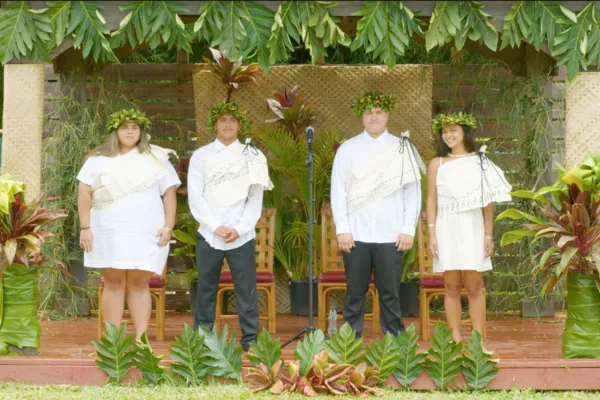
In 2026, kanakaNowelo had the opportunity to return to Kawaikini Public Charter School on Kauaʻi to provide sound and video documentation for its graduation ceremony.
This wasn't a massive graduating class.
There were four seniors.
And that intimacy was part of what made documenting their graduation so meaningful.
More Than Walking Across a Stage
A graduation video shouldn't only capture the moment someone receives their diploma.
It should preserve everything surrounding that moment.
At Kawaikini, the graduation incorporated ceremony, oli, mele, hula, genealogy chants, presentations from the graduates, and moments between students and their families.
ʻOhana presented graduates with lei.
The seniors shared songs, chants, and lei of their own.
Each senior also presented their genealogy chant.
Throughout the ceremony, you could see how much the moment meant to the families watching.
One moment that particularly stood out to me was watching an older sister become emotional as her younger sister presented her with a lei.
But she wasn't the only one.
Throughout the graduation, there were tears from different families as they watched their keiki reach this milestone.
Those are the moments that make documenting a graduation about much more than recording a program.
Let the Family Watch the Graduation—Not Their Phone
There is something I think schools should consider when planning graduation:
How do we allow families to simply be present?
Without professional video coverage, parents and relatives often feel responsible for recording important moments themselves.
Someone pulls out a phone when their graduate begins speaking.
Another person tries to record the hula.
Someone else holds their phone above the crowd as their child receives a diploma.
They're preserving the moment—but they're also experiencing part of it through a screen.
Professional graduation videography gives families another option.
They can watch.
They can clap.
They can cry.
They can give lei.
They can experience the ceremony knowing there is a dedicated production documenting what is happening.
Afterward, the video gives them an opportunity to experience those moments again.
Documenting the Entire Ceremony
For Kawaikini, kanakaNowelo documented the complete graduation rather than only creating a short highlight.
The ceremony lasted approximately two to three hours, and we recorded it using three Blackmagic Studio Camera 6K cameras, with each camera independently recording in 6K to SanDisk SSD media.
Multiple cameras are especially valuable for a graduation because several meaningful things can happen simultaneously.
While a graduate is speaking, a parent may be reacting.
While someone presents a lei, another family member may be watching emotionally from the audience.
A wide camera can preserve the complete ceremony while additional angles allow the finished video to bring the viewer closer to individual moments.
The goal isn't to make the production itself noticeable.
It's to make sure the moments aren't lost.
Sound Matters Just as Much as the Picture
kanakaNowelo was also responsible for sound for the graduation.
That's an important part of documenting a ceremony because years from now, families may care just as much about what they can hear as what they can see.
A beautiful image doesn't mean much if a graduate's speech can't be understood.
For this ceremony, the school had its own mixing board while our cameras also captured audio in-camera as part of the video recording.
That allowed us to document not only the visual elements of graduation, but the voices, chants, songs, and other sounds that were part of the experience.
A Graduation Primarily in ʻŌlelo Hawaiʻi
Kawaikini's ceremony was conducted primarily in ʻōlelo Hawaiʻi.
That matters when documenting the event.
kanakaNowelo's previous work with Kawaikini included spending approximately four months documenting the school, its students, teachers, field experiences, and history for an accreditation film produced entirely in Hawaiian.
By the time graduation arrived, I had already gotten to know some of these students a little through that process.
There was something meaningful about previously documenting parts of their educational experience and then returning to see some of those same students reach graduation.
My own background in Hawaiian immersion education also helps me follow what is happening during a Hawaiian-language ceremony rather than treating the language simply as sound accompanying an image.
For culturally grounded schools, understanding context can make a difference in how an event is documented.
Respecting What Makes Each Graduation Different
Not every graduation should look the same.
For some schools, commencement may revolve around speeches, diplomas, and walking across a stage.
At Kawaikini, there were additional layers of genealogy, Hawaiian language, mele, hula, ceremony, lei, and ʻohana.
Those aren't simply extra things to capture between the "important" parts.
They are important parts.
When kanakaNowelo documents a school or cultural organization, our goal is to understand what matters to that community rather than arriving with the assumption that every event follows the same template.
That means communicating beforehand, understanding the program, and recognizing when cultural awareness is just as important as technical production.
Outdoor Graduation Means Preparing for Kauaʻi Weather
The graduation took place at Kawaikini's school campus, which also meant preparing for an outdoor production.
Weather is always something to consider when filming outdoors on Kauaʻi.
For the cameras, I needed to provide rain protection because there wasn't permanent cover available for the production positions.
But protecting professional cinema equipment from rain introduces another consideration: heat.
A rain cover can restrict some of the cool airflow reaching a camera. For equipment designed to record continuously for hours, protecting it from water while still monitoring operating conditions becomes part of the production.
Each Blackmagic Studio Camera 6K was independently powered using SmallRig batteries through D-Tap, giving us a production setup capable of continuously documenting the ceremony without depending entirely on where electrical outlets happened to be located.
These aren't details families should need to worry about on graduation day.
They're the kinds of things the video production team should already be thinking about.
What Happens When ʻOhana Can't Attend?
Professional graduation coverage also serves another important purpose.
Not every family member can always make it to Kauaʻi for graduation.
ʻOhana may live on another island, on the continent, or elsewhere around the world.
For this graduation, the finished video could be shared through YouTube so families could return to the ceremony afterward.
kanakaNowelo can also provide livestream production for graduations when a school wants distant family members to be able to watch the ceremony as it happens.
That can make professional video production serve two groups simultaneously:
the families sitting in front of the graduates, and the families who wish they could be.
Graduation Happens Once
Schools spend years educating their students.
Families spend years supporting them.
Students spend years working toward the moment when they finally graduate.
Then the ceremony itself may only last a few hours.
That's why I believe graduation is worth professionally documenting.
Not because every ceremony needs to become a cinematic production.
But because ten or twenty years from now, today's graduate may want to hear those chants again.
A parent may want to watch their keiki's speech.
Siblings may remember the lei they exchanged.
Families may want to see the people who were sitting beside them.
And eventually, another generation may get to see what their parent's or grandparent's graduation looked and sounded like.
A graduation happens once.
The video gives ʻohana a way to return to it.
Graduation Videography and Livestreaming on Kauaʻi
kanakaNowelo provides professional video production for graduations, commencements, school ceremonies, Hawaiian immersion programs, charter schools, private schools, colleges, cultural organizations, and educational events on Kauaʻi and throughout Hawaiʻi.
From multi-camera documentation and professional audio to livestreaming for distant ʻohana, we can build the production around the needs of your school and community.
If your school has an upcoming graduation, contact kanakaNowelo to discuss professional graduation video or livestream coverage and let your families be present for the moment while we capture the rest.